When people want to find something online, Google is not always the first place they go.
Someone looking for a restaurant may check Instagram. Someone planning to buy a product may watch YouTube reviews. A person looking for a local service may check Google Maps and customer reviews. Some people now ask AI tools for recommendations before visiting a website.
The way people search has changed.
For businesses, this means that being visible on Google is important, but it is not enough. Customers can find your business in many different places before they decide to contact you or make a purchase.
This is where Search Everywhere Optimization comes in.
What Is Search Everywhere Optimization?
Search Everywhere Optimization means making your business easy to find across the different platforms people use to search and discover information.
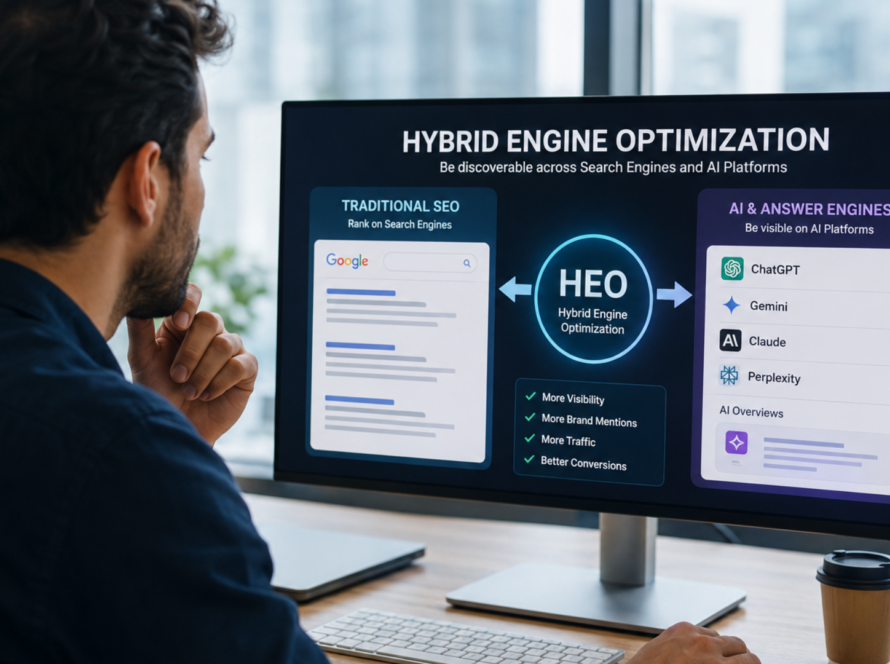
Traditional SEO mainly focuses on getting a website to rank on search engines. That is still important. But today, people use many other platforms to find businesses and information.
They may use Google, Google Maps, YouTube, Instagram, LinkedIn, online directories, review websites, marketplaces, and AI tools.
For example, imagine someone is looking for a digital marketing company. They may search Google and find a few companies. Then they may check their reviews, visit their LinkedIn page, look at their website, and search for their name on social media.
All these steps can influence their decision.
So, Search Everywhere Optimization is not about being everywhere. It is about being visible in the places where your customers are actually searching.
Why Is Search Changing?
People have more options when it comes to finding information.
A few years ago, most people would search Google, open a few websites, and choose one. Today, the process can be very different.
A customer may search Google, check reviews, watch a video, look at social media, compare different businesses, and then ask an AI tool for more information.
This means that a customer may come across your business several times before contacting you.
Search engines are also changing. Google now shows maps, videos, images, reviews, featured snippets, shopping results, and AI-generated answers in search results.
Because of this, businesses should not focus only on ranking for keywords. They should also think about how customers find and research their business online.
Important Areas of Search Everywhere Optimization
1. Google and Traditional SEO
SEO is still an important part of online marketing.
Your website should have useful content, clear information, relevant keywords, good internal links, and a strong technical setup.
But good SEO is not about putting the same keyword on a page again and again.
The content should answer the questions people are actually asking. If someone visits your website, they should quickly understand what you offer and how you can help them.
2. Local Search
Local search is especially important for businesses that serve a particular city or area.
For example, if someone searches for “dentist near me” or “software company in Dubai,” they are usually looking for a business they can contact.
This is why your Google Business Profile should be properly maintained. Your business name, address, phone number, working hours, services, photos, and other information should be accurate.
Customer reviews are also important. Before contacting a business, many people check what other customers have said about it.
3. Social Media
People do not use social media only to communicate with friends anymore. They also use it to discover brands, products, services, restaurants, professionals, and local businesses.
Instagram, Facebook, LinkedIn, and TikTok can all help people discover a business.
Your profile should clearly explain what you do. Your posts should also provide useful information instead of simply promoting your services all the time.
For some businesses, a helpful post or video can bring more attention than a traditional advertisement.
4. YouTube and Video Search
Many people prefer watching a video when they want to understand something.
For example, a software company can show how its product works. A restaurant can share videos of its food and location. A real estate company can give a video tour of a property.
These videos can help people understand your business before they contact you.
YouTube is also a search engine. People use it to find answers, learn new things, compare products, and research services.
Creating useful videos can therefore become another way for customers to discover your business.
5. AI Search
AI is becoming another part of the search journey.
Instead of searching several websites, people can ask an AI tool a question and get an answer in seconds.
This is changing how businesses should approach their online content.
Your website should clearly explain your services, products, experience, and areas of expertise. Content should be useful and based on real information.
For example, if you are a software development company, your website should clearly explain the types of software you develop, the industries you work with, your experience, and the questions customers commonly ask.
The more useful and trustworthy your information is, the stronger your overall online presence can become.
6. Reviews and Online Listings
Reviews can have a strong influence on customer decisions.
Think about the last time you chose a restaurant, hotel, clinic, or service provider. You probably checked the reviews before making a decision.
The same thing happens with many other businesses.
Businesses should keep their profiles on relevant websites and directories updated. Information such as phone numbers, addresses, services, and website links should be correct.
Genuine customer reviews can also help build trust.
How Can a Digital Marketing Agency Help?
A digital marketing agency can help a business improve its visibility across different online channels.
This may include SEO, local SEO, content marketing, social media, video marketing, online reputation, paid advertising, and AI search optimization.
But every business does not need to use every platform.
For example, LinkedIn may be more useful for a B2B company, while Instagram and Google Maps may be more useful for a restaurant or local service business.
The first step is to understand where your customers are searching. The strategy can then focus on those platforms.
The Future of Digital Visibility
Search Everywhere Optimization does not mean that traditional SEO is no longer important.
SEO is still a major part of online visibility. The difference is that customers now have many more ways to find a business.
They may see your website on Google, check your reviews on Maps, watch your video on YouTube, visit your Instagram profile, and then ask an AI tool about your company.
Every one of these interactions can influence their decision.
This is why businesses need to keep their information clear and consistent across different platforms.
Conclusion
The way people search online is changing.
Google is still important, but customers are also using social media, YouTube, maps, review websites, online directories, marketplaces, and AI tools to find information.
Search Everywhere Optimization is about adapting to this change.
Instead of focusing only on website rankings, businesses should think about the complete customer journey. Where do your customers search? What information do they need? What makes them trust a business?
Answering these questions can help you build a stronger online presence.
The goal is not to be everywhere.
The goal is to be in the right places, with the right information, when your customers are looking for you.